


SPT: Ray Adam, following three political books and the Schattenmächte trilogy, you are now publishing an illustrated novel about intelligent animal peoples living eleven thousand years after the fall of humankind. What led you to take this seemingly unexpected step? Why is the story set in Troyes of all places, and what connects this new world with your previous books?
Ray Adam: Some books begin with a plan. Others grow from a single thought that suddenly refuses to go away. The Animals of Troyes began in neither fashion. The novel arose from a question that had occupied me while I was working on other books, until, early in April, it took an unexpected turn.
That spring, I was deeply engaged in writing my three political books, Der gute Staat, Deutschland im Ausverkauf and 54 Billionen. None of them was concerned solely with the politics of the day or with individual decisions made by governments and society. Behind them all stood the same, more fundamental question: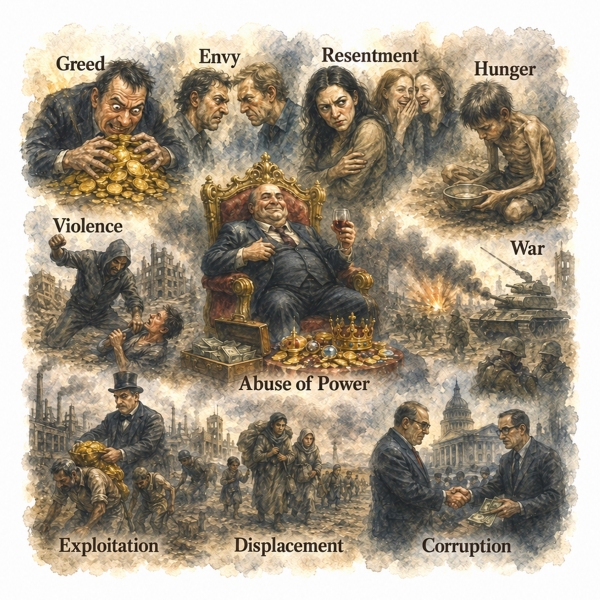
Why do human beings find it so difficult to preserve a peaceful and just society, although they possess knowledge, history and reason?
Power, fear, responsibility, trust and solidarity are not abstract ideas. They shape the life of every individual and ultimately determine whether a community can endure. Then another question arose, one that seemed almost playful at first:
What would become of the Earth if humankind were no longer there?
Not in the first years after some great catastrophe, but eleven thousand years later, when cities had crumbled, roads had vanished, and nature had reclaimed almost every trace of the human world.
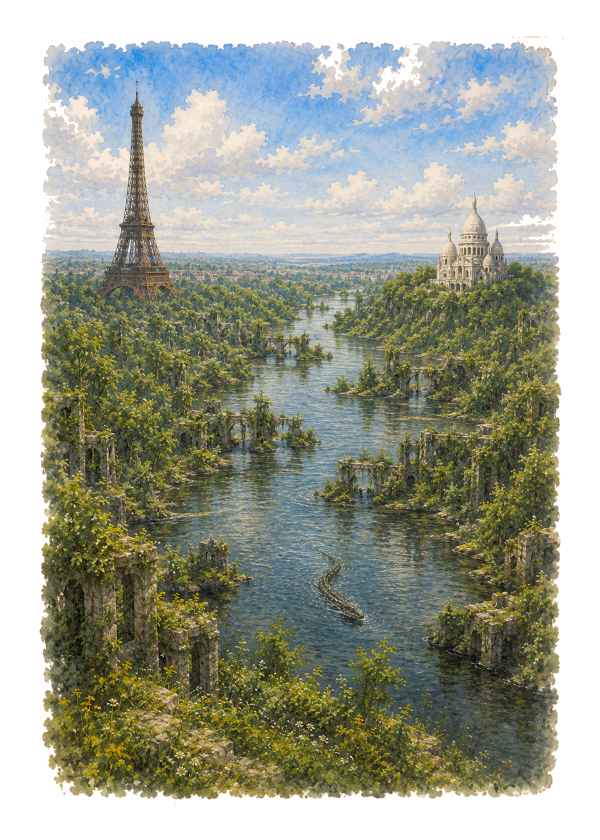
The Earth would endure. Forests would grow, rivers would seek new courses, and mountains would slowly change. But who would inhabit that world? And what if, in this distant future, animals could not only feel and speak to one another, but possessed a highly developed intelligence, a shared culture and a spiritual life of their own? With that, the idea for »The Animals of Troyes« was born.
The Forgotten World of Schattenmächte
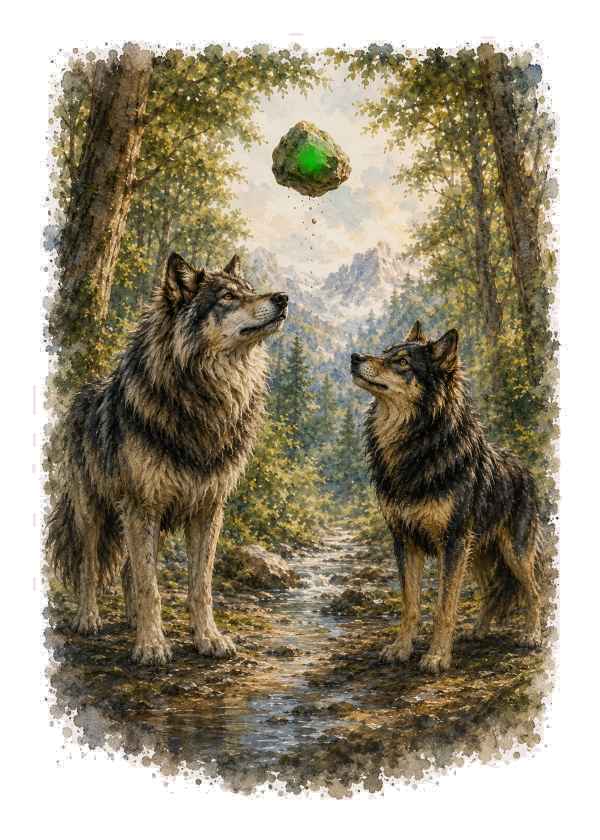
The foundations of this world had already been laid in The Schattenmächte trilogy. In those novels, Robert spends more than a century trying in vain to prevent the downfall of humankind. While humanity is eventually granted a new future elsewhere, Lawrence remains behind upon the wounded Earth. He is a descendant of Jana the she-wolf and the leader of his people.
But what became of that abandoned world? For many years, the question returned to me. At last, as I remembered the animals that had shared my own life, the answer began to take shape. Eleven thousand years later, the Earth has grown green again. Most of its ancient wounds have healed. In the country surrounding what was once Troyes live the descendants of animals whom some readers will already know from the trilogy.
But why Troyes? Why not Coventry, Ventimiglia or one of the other places that appear in my novels?
That answer, too, lies in the third Schattenmächte novel. In a vision, Robert learns that after his final journey through time, from the year 2024 to the year 1000, he will spend the rest of his life in Troyes as a respected writer. He will write under the name Chrestien des Troyes.[1]
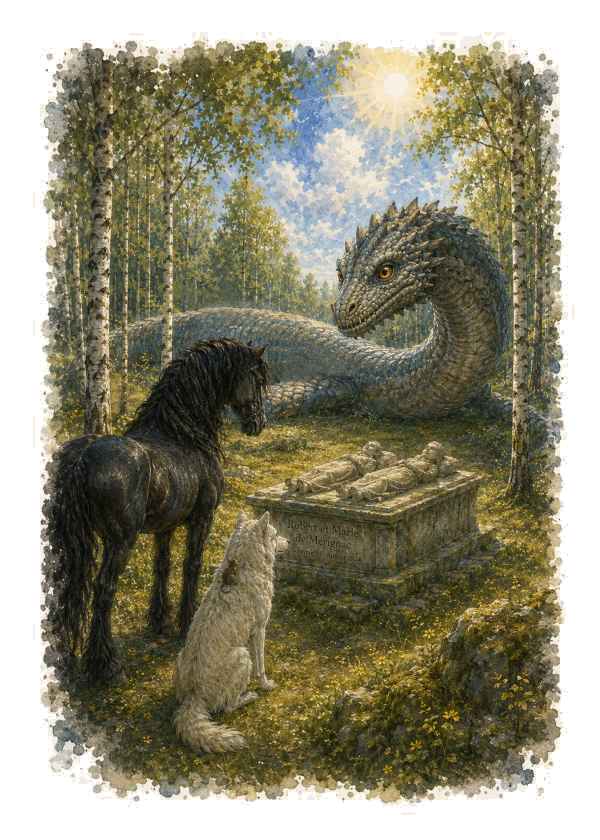
Robert and his wife Marie live in the city for 824 years. Even eleven thousand years after their deaths, the animals continue to tend their tomb. Troyes thus becomes the bond between the lost world of humankind and the new world of the animals.
Animals That Remain Animals
From the beginning, one principle was clear to me: my animals must remain animals. They wear no clothes, walk on four legs and do not behave like human beings covered in fur. They live in caves, follow their instincts and perceive the world through the senses of their own species. Yet they possess language and culture, friendship and love, and a profound sense of responsibility.
The Canids occupy a special place among them. They descend from ancient hybrids of wolves and domestic dogs.[2]
After eleven thousand years, they have returned in body and health to something very close to the wolf. They are much the same size, have long lupine muzzles, and no longer suffer from the physical distortions produced by human breeding.
What remains is a greater variety of colour and a few individual traits. Sammy has yellow curls; Dunny has folded ears. But both are Canids, not domestic dogs as we know them today.
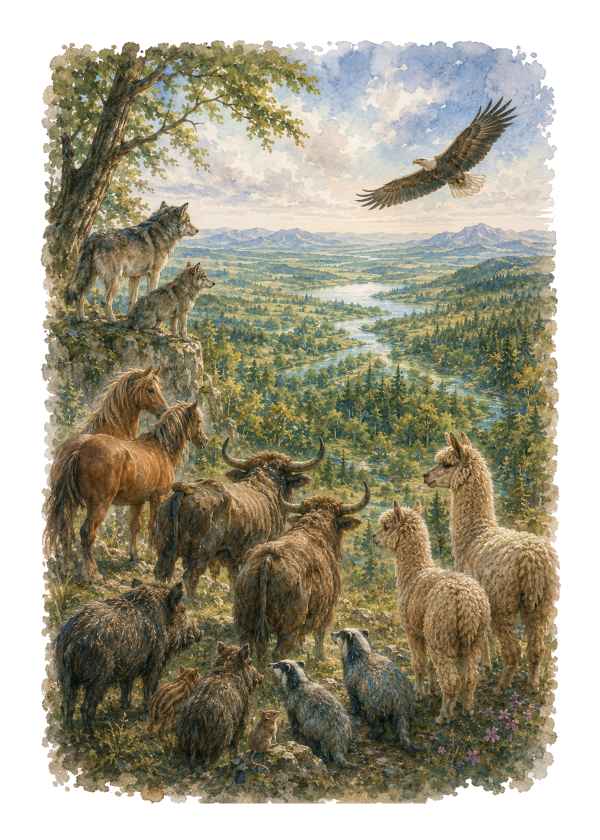
The world of Troyes is also home to horses, mice, wild cattle, alpacas, wild pigs and many other animals. Each people has its own way of life and bears its share of responsibility for the world they hold in common.
Gaia and the Invisible World
Over them all watches Gaia, the collective consciousness and memory of every animal and plant that has lived upon the Earth since life began.[3]
Through her network, living beings are connected with one another and with nature itself. Gaia preserves knowledge, maintains the balance of the biosphere and sometimes speaks to the animals in their dreams.
This idea has not only a scientific but also a distinctly Christian foundation. Christianity speaks of an invisible reality alongside the visible creation.[4]
In my novels, this is an additional plane of existence, the realm from which supernatural and magical powers arise.
In the third Schattenmächte novel, Richard — who is in truth God — jokingly describes the Holy Spirit as a kind of biological wireless network. Beneath the humour lies a serious thought: living beings may appear separate from one another, yet remain joined upon an invisible spiritual plane.
When a Political Question Becomes an Adventure
For eleven thousand years, the animal peoples of Troyes have lived in peace. Yet their world is not perfect. They make mistakes, quarrel among themselves, and can be vain, fearful or unjust.
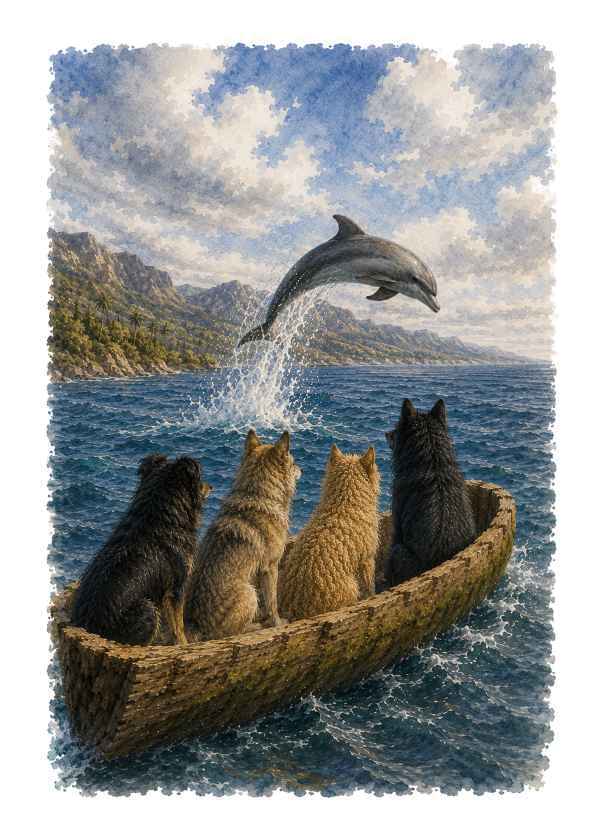
When Gaia suddenly falls silent and mysterious fish-like creatures rise from the sea, the old order begins to falter. Fear and mistrust spread, and Dunny, a sixteen-year-old Canid, must set out upon a journey that will take him to the northern Arctic Circle, across the Mediterranean and onwards to the pyramids of Giza.
Thus a political question became an adventure novel, yet the questions from which it grew remain:
What holds a society together? Whom can we trust? When does leadership become tyranny? Can a common faith preserve peace? And how swiftly does an established order crumble when fear takes the place of reason?
The animals of Troyes possess something that the human beings of their world had lost: the deep awareness that they belong to a greater whole. Perhaps that is the essential difference.
Not a Children’s Book
Despite its animal protagonists, The Animals of Troyes is not a children’s book. It is an illustrated novel for adults — a story about friendship, responsibility, faith, nature and the ever-fragile possibility of peace.
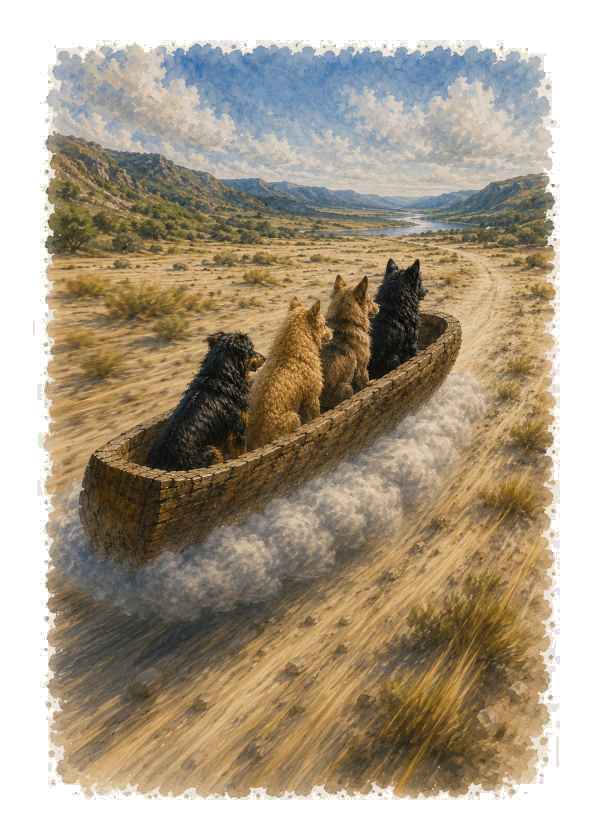
Some two hundred watercolour illustrations, created especially for the novel, accompany the story and make Troyes a world that can be seen as well as described. From the first ideas came landscapes, peoples, religions and, eventually, a natural history of this future Earth.
Looking back, the road from 54 Trillion through The Schattenmächte to Troyes no longer seems a departure from my earlier work. All these books approach the same great question from different directions:
What does a world require if those who inhabit it are to live together in freedom, responsibility and peace?
Humankind has yet to find a final answer.
Perhaps the animals of Troyes will fare better.
SPT: Thank you for speaking with us.